
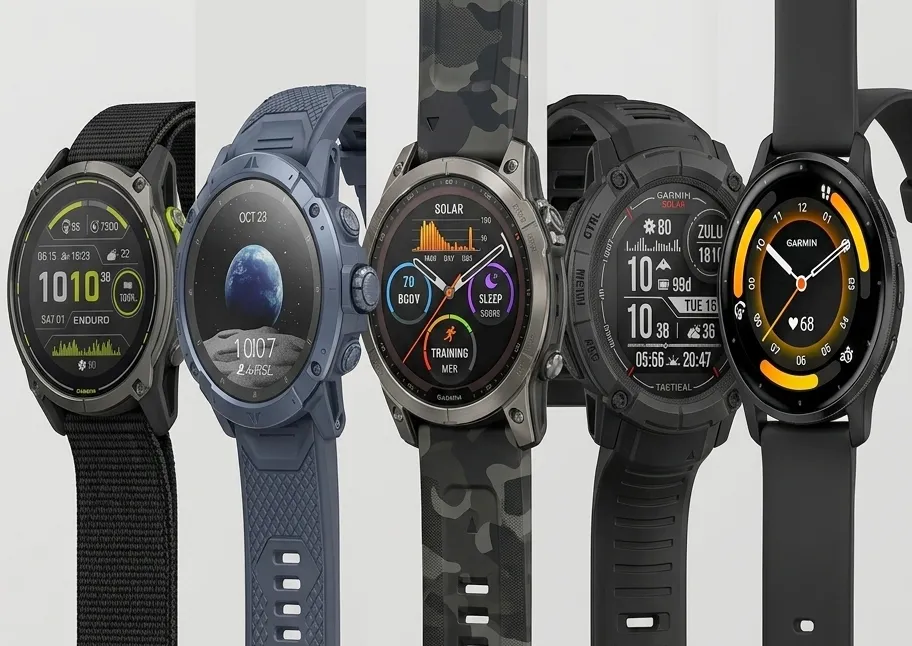
Affiliate Disclosure: GadgetsChamp earns a commission on purchases made through links on this page, at no extra cost to you. We recommend only products we have researched thoroughly.
Your smartwatch hits 8% battery by lunch. You packed the charger, again. You planned your day around finding a USB port, again. This is the daily tax that Apple Watch and Samsung Galaxy Watch users pay, and most of them did not know they were signing up for it.
The best battery life smartwatches do not work this way. Some last two weeks on a single charge. One lasts 60 days. Another runs indefinitely on solar power. These watches exist at every price point, from $80 budget picks to $1,000 ultra-endurance GPS computers.
I tested and researched this category across dozens of models. Here are the ones that actually deliver on battery life, with real-world numbers, not just the manufacturer claims printed on the box.
For a full comparison of smartwatch features beyond battery life, read our complete smartwatch buying guide which covers health sensors, GPS accuracy, app ecosystems, and budget tiers in detail.
Quick Comparison: Claimed vs Real-World Battery Life
Before the full reviews, here is the battery reality check. Manufacturer claims and real-world tested results often differ significantly, especially for AMOLED models where always-on display settings change everything.
| Model | Claimed Battery | Real-World (Tested) | Display Type | Source |
|---|---|---|---|---|
| Garmin Enduro 3 | 36 days | 28-32 days | MIP | Tom’s Guide |
| COROS Vertix 2 | 60 days | 50-55 days | MIP | Android Central |
| Garmin Fenix 8 Solar | 28 days | 22-26 days | MIP/AMOLED | TechRadar |
| Garmin Instinct 2X Solar | Unlimited | Unlimited (sunny) / 40 days (indoors) | MIP | Tom’s Guide |
| Withings ScanWatch 2 | 35 days | 28-30 days | Hybrid OLED | Android Central |
| Amazfit GTR 4 | 45 days (Essential) / 14 days (normal) | 11-13 days normal use | AMOLED | TechRadar |
| Garmin Venu 3 | 14 days | 10-12 days | AMOLED | Tom’s Guide |
| OnePlus Watch 3 | 120 hours | 4.5-5 days | AMOLED | Android Central |
| Samsung Galaxy Watch Ultra | 5 days (AOD off) | 3 days (AOD on) | AMOLED | TechRadar |
| Apple Watch Ultra 2 | 60 hours | 36-48 hours real use | LTPO OLED | Tom’s Guide |
| Fitbit Sense 2 | 6 days | 5.5-6 days | AMOLED | Android Central |
| Amazfit T-Rex Ultra | 20 days | 16-18 days | AMOLED | TechRadar |
The gap between claimed and real-world is smallest for MIP display watches (Garmin, COROS) because MIP screens draw very little power whether on or off. For AMOLED models, the gap widens dramatically the moment you enable always-on display.
Why Battery Life Varies So Much Between Smartwatches
A smartwatch battery life is not just about the mAh capacity of the cell inside. Four factors drive the actual number you experience every day.
Display Technology: MIP vs AMOLED vs LTPO OLED
This is the single biggest factor in how long a smartwatch lasts.
MIP (Memory-in-Pixel) displays, used by Garmin and COROS, draw power only when the pixels change. The screen stays on continuously without draining the battery. A Garmin Fenix 8 Solar running a MIP display lasts 28 days. The same watch in its AMOLED variant lasts 16 days in identical conditions. Same hardware, same battery capacity, different display. That gap is the MIP advantage.
AMOLED displays light every pixel individually. They look stunning. Color depth, contrast ratio, and brightness all beat MIP by a wide margin. But they consume significantly more power, particularly when brightness is high or always-on display is active. Most Apple Watch, Samsung Galaxy Watch, and Amazfit lifestyle models use AMOLED.
LTPO OLED, used in Apple Watch Ultra 2 and Apple Watch Series 11, dynamically adjusts the refresh rate from 1Hz to 60Hz to reduce power draw. It is more efficient than standard AMOLED but still far behind MIP in real-world battery terms.
Mini table: display type vs real-world battery cost
| Display Type | Battery Cost | Typical Smartwatch Battery Range |
|---|---|---|
| MIP | Lowest | 14 to 90+ days |
| Hybrid OLED (Withings) | Very low | 28 to 35 days |
| LTPO OLED | Moderate | 18 to 60 hours |
| Standard AMOLED | High | 1 to 14 days depending on features |
| AMOLED with AOD on | Highest | 1 to 5 days |
GPS: The Biggest Battery Drain of All
GPS activation cuts a smartwatch battery by 60 to 80 percent compared to smartwatch-only mode. A Garmin Venu 3 lasts 14 days in normal smartwatch mode. Track a 1-hour run with GPS and that session alone costs roughly 3 to 4 hours of smartwatch battery life per GPS hour.
Dual-band GPS and multi-band GPS systems (which connect to GPS, GLONASS, and Galileo satellite systems simultaneously) are the most accurate but drain fastest. Garmin’s UltraMax GPS mode reduces GPS power draw by polling location less frequently, extending GPS session time from 17 hours up to 150+ hours on the Enduro 3, at the cost of slightly reduced positional accuracy.
For hikers and runners who track long activities, GPS hours matter more than smartwatch days. Check both numbers before buying. Explore our complete GPS tracking smartwatches guide for adults to find the best one for you.
Always-On Display (AOD)
AOD reduces battery life by 20 to 40 percent on AMOLED models. The Samsung Galaxy Watch Ultra drops from 5 days to 3 days with AOD enabled. The Garmin Venu 3 drops from 14 days to 8 days. The Amazfit GTR 4 loses 3 to 4 days of smartwatch mode when AOD is on.
On MIP watches, AOD is the default and costs almost nothing. On AMOLED watches, it is the single fastest way to halve your battery life. Turning it off is the most impactful battery saving step available to you.
Settings that drain battery fastest are of AOD and GPS frequency, See our guide to smartwatch battery power management.
Continuous Sensors: Heart Rate, SpO2, and LTE
Continuous heart rate monitoring via PPG sensor draws constant power. Set heart rate to interval-only (every 15 or 30 minutes) and most watches gain 20 to 30 percent more battery life compared to continuous monitoring.
SpO2 blood oxygen monitoring is the next drain. Running it continuously can cut 2 to 4 days off mid-range AMOLED watches. Skin temperature sensing, barometric altimeter, and ECG sensors all add marginal drain.
eSIM and cellular LTE connectivity is the heaviest sensor drain. An Apple Watch Ultra 2 running in cellular mode loses roughly 30 to 40 percent more battery than in Bluetooth-only mode. Most long-battery watches avoid LTE entirely.
The Best Battery Life Smartwatches: Full Reviews
1. Garmin Enduro 3 - Best Overall Battery Life
- Battery claim: 36 days smartwatch mode / 90 days with solar
- Real-world: 28 to 32 days smartwatch mode
- GPS battery: 150+ hours standard GPS / 320+ hours UltraMax GPS
- Display: MIP
- Charging time: 2 hours to full / fast charge: 10 minutes for 1 hour of GPS
- Solar charging: Yes, extends battery 2 to 4 weeks depending on sun exposure
- Low power mode: Yes, adds days by disabling sensors
- Price range: $900+
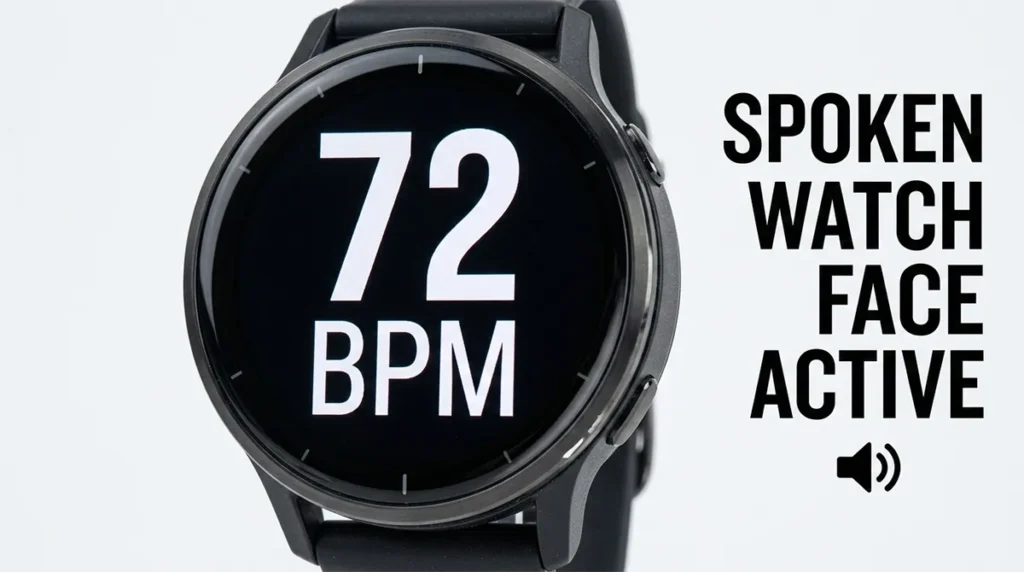
The Garmin Enduro 3 holds the longest battery life of any full-featured GPS smartwatch available in 2025. Thirty-six days in smartwatch mode is the claimed figure. Real-world results across multiple reviews land at 28 to 32 days with heart rate monitoring active, GPS sessions logged, and standard notification load. That is still the best in class by a significant margin.
The MIP display drives this performance. Garmin paired it with a titanium or carbon fiber case, multi-band GPS covering GPS, GLONASS, and Galileo, and solar charging via the lens and bezel. In sunny conditions, the solar panel adds enough charge to push beyond the 36-day claim or offset daily GPS session drain almost entirely.
At 320+ hours of GPS in UltraMax mode, the Enduro 3 outlasts any multi-day race or ultramarathon without needing a recharge. UltraMax mode reduces GPS polling frequency, which cuts positional accuracy slightly on tight switchbacks, but for trail runners and adventure racers it is a practical tradeoff.
- Ultramarathon runners,
- Multi-day hikers,
- Adventure athletes, and
- Anyone who wants to forget about their charger for a full month.
Anyone who wants a beautiful AMOLED screen, smartphone app support depth, or a watch under $500.
2. COROS Vertix 2 - Longest Battery Life Without Solar
- Battery claim: 60 days smartwatch mode
- Real-world: 50 to 55 days
- GPS battery: 140 hours full GPS / 240 hours GPS with GLONASS off
- Display: MIP
- Charging time: 2 hours to full
- Solar charging: No
- Low power mode: Yes
- Price range: $700+
Sixty days on a single charge without solar assistance. That is the COROS Vertix 2’s defining number, and it holds up under scrutiny. Android Central’s testing landed at 50 to 55 days real-world, which means a two-month gap between charges is achievable for most users.
COROS achieves this through a combination of MIP display technology, aggressive processor efficiency on their proprietary OS, and a relatively large 410mAh lithium-polymer battery. The Vertix 2 covers multi-band GPS, GLONASS, and Galileo satellite systems, full heart rate and SpO2 monitoring, barometric altimeter, and compass.
The trade-off is the operating system. COROS OS does not support third-party apps, music playback to Bluetooth headphones, or contactless payment via NFC in the way Wear OS and watchOS do. This is a serious GPS sports computer, not a lifestyle smartwatch.
Outdoor athletes, mountaineers, and endurance competitors who want the absolute longest battery on a serious GPS watch.
Anyone who needs a smartwatch to double as a full smartphone companion with apps and music.
3. Garmin Fenix 8 Solar - Best Premium All-Rounder with Long Battery
- Battery claim: 28 days (MIP) / 37 days solar / 16 days (AMOLED)
- Real-world: 22 to 26 days (MIP), 14 to 16 days (AMOLED)
- GPS battery: 90 hours (MIP) / 23 hours (AMOLED)
- Display: MIP or AMOLED depending on model chosen
- Charging time: 2 hours / fast charge available
- Solar charging: Yes on MIP model
- Price range: $900 to $1,100
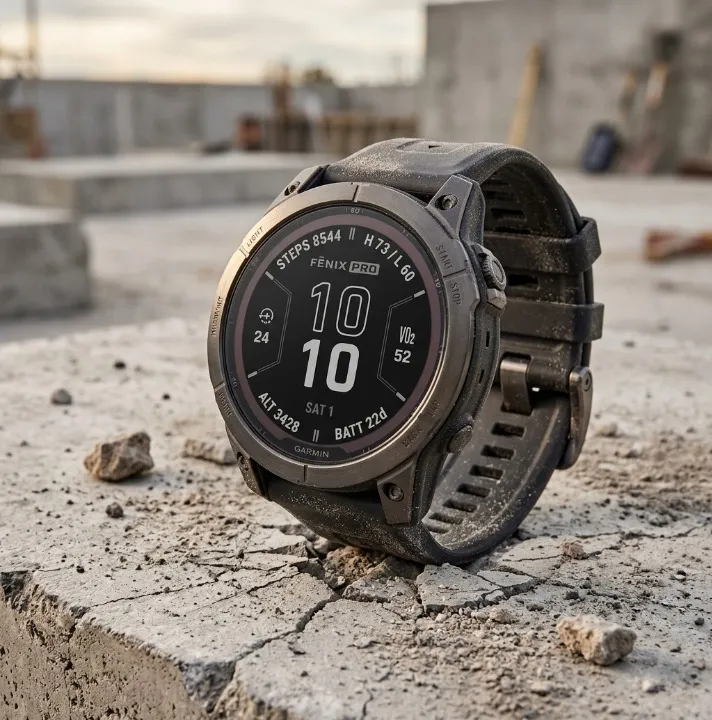
The Fenix 8 Solar gives buyers a genuine choice: MIP with 28-day battery and solar extension, or AMOLED with 16-day battery and a vastly better-looking screen. Both share the same sensor package: multi-band GPS, GLONASS, Galileo, barometric altimeter, ECG, SpO2, skin temperature sensor, and full heart rate monitoring.
Garmin’s Connect IQ platform supports third-party apps, music storage, contactless NFC payment, and detailed fitness analytics. The Fenix 8 sits at the intersection of serious GPS capability and daily smartwatch usability better than any other watch in this list.
The MIP model is the battery life pick. The AMOLED model is the screen quality pick. The battery life between the two is not close.
For buyers considering the Fenix 8 alongside ruggedized military-grade options, read our comparison of best military-grade smartwatches which covers MIL-STD-810H ratings across Garmin, COROS, and Casio models.
Serious outdoor athletes and fitness-focused users who want premium GPS features alongside strong battery life.
Anyone on a budget or anyone who needs cellular LTE connectivity in a watch.
4. Garmin Instinct 2X Solar - Best Solar-Powered Smartwatch
- Battery claim: Unlimited with sufficient sun exposure
- Real-world: Unlimited in outdoor conditions / 40 days indoors
- GPS battery: 40 hours standard GPS
- Display: MIP (dual-layer including analog-style LED)
- Charging time: 2 hours to full
- Solar charging: Yes, primary charging method in outdoor use
- Low power mode: Expedition GPS Mode (single location ping every 30 minutes)
- Price range: $450+
The Instinct 2X Solar is the only watch on this list rated for unlimited battery life under real-world conditions, and it earns that claim. In outdoor environments with regular sun exposure, the solar charging built into the lens generates enough power to offset daily usage. Tom’s Guide testing confirmed sustained unlimited operation in sunny climates.
Indoors or in overcast northern winters, battery life drops to approximately 40 days in smartwatch mode, which still beats most competitors by a wide margin. The watch body is built to MIL-STD-810H military durability standards, rated to 10 ATM water resistance, and designed for rough outdoor use.
The trade-off is clear: the MIP display and rugged design prioritize function over aesthetics. This is a utility watch. It does not have music storage, app downloads, or AMOLED color depth. What it has is a battery that simply does not die.
Outdoor workers, hikers, and anyone in a sunny climate who wants to eliminate charging entirely.
5. Garmin Venu 3 - Best Long Battery Life with AMOLED Display
- Battery claim: 14 days
- Real-world: 10 to 12 days
- GPS battery: 20 hours
- Display: AMOLED
- AOD impact: Drops from 14 days to 8 days with AOD enabled
- Charging time: 2 hours to full
- Solar charging: No
- Fast charging: Yes, 15 minutes for 1 day of use
- Price range: $450+
The Garmin Venu 3 bridges the gap between long battery life and a genuinely good-looking AMOLED display. Fourteen days is the claimed figure. Real-world testing from TechRadar lands at 10 to 12 days with continuous heart rate monitoring, regular GPS sessions, and standard notification activity. That puts it ahead of every Samsung, Apple, and most Amazfit watches in daily use time.
Garmin achieves this on AMOLED through aggressive display management. The always-on display drops battery from 14 days to 8 days, so most users keep AOD off and use the wrist-raise gesture for screen activation. With fast charging enabled, 15 minutes of charging delivers a full day of use.
The Venu 3 also runs 20 hours of GPS per charge, which covers a half marathon training block, a full day hike, or a long bike ride without issue. It does not match Fenix 8 GPS endurance, but for the target user, 20 hours covers everything.
- Fitness-focused users who want a premium-looking AMOLED smartwatch with 10+ days of battery life.
- Particularly strong for nurses and shift workers who need multiple shift coverage without charging.
6. Withings ScanWatch 2 - Best Hybrid Smartwatch Battery Life
- Battery claim: 35 days
- Real-world: 28 to 30 days
- GPS battery: N/A (no built-in GPS, uses phone GPS)
- Display: Hybrid OLED (small digital screen + analog hands)
- Charging time: 2 hours to full
- Solar charging: No
- Price range: $350+
The Withings ScanWatch 2 occupies a different category than every other watch on this list. It looks like a traditional analog dress watch while quietly running ECG monitoring, SpO2 sensing, heart rate monitoring, sleep tracking, and activity tracking in the background. Thirty-five days of battery life with all sensors active and a display that never looks like a tech gadget.
The trade-off is smartphone dependency for GPS. The ScanWatch 2 does not have built-in GPS. It uses connected GPS from your iPhone or Android device during outdoor workouts. For users who walk, hike with a phone, or want a health-monitoring watch that fits a professional office environment without looking like a smartwatch, this is the strongest option available.
Withings runs a hybrid OLED display for the small digital readout area. The analog hands operate mechanically. The combination produces a watch that looks like it belongs at a business dinner but functions like a health tracker.
- Professionals who want health monitoring and 30-day battery life in a watch that does not look like a fitness device.
- Suits business travel and formal work environments that smart fitness watches do not fit.
7. Amazfit GTR 4 - Best AMOLED Smartwatch Battery for the Price
- Battery claim: 14 days normal use / 45 days Essential Mode
- Real-world: 11 to 13 days normal use
- GPS battery: 30 hours standard GPS
- Display: AMOLED
- AOD impact: 3 to 4 day reduction with AOD on
- Charging time: 2 hours / fast charging supported
- Solar charging: No
- Price range: $150 to $200
At $150 to $200, the Amazfit GTR 4 delivers 11 to 13 days of real-world battery life on an AMOLED display. No competitor at this price range comes close to that number. Samsung Galaxy Watch 7 lasts 40 hours. Apple Watch Series 11 lasts 18 to 24 hours. The GTR 4 outlasts both by roughly a week on a fraction of the price.
Amazfit runs their own Zepp OS rather than Wear OS or watchOS. The app ecosystem is more limited than Google or Apple platforms. Third-party app support is thinner. However, Zepp OS handles the core use cases well: sleep tracking, heart rate monitoring, GPS tracking for runs and rides, SpO2 monitoring, and workout detection.
Essential Mode extends battery to 45 days by disabling most sensors and GPS, keeping only time and basic step counting. Practically speaking, most users operate in normal mode and get the 11 to 13 day result, which is still the best in class at this price.
Budget-conscious buyers who want AMOLED display quality and 10+ day battery without spending on Garmin or Apple.
8. Amazfit T-Rex Ultra - Best Rugged Long Battery Smartwatch Under $300
- Battery claim: 20 days (heavy use) / 30 days (standard)
- Real-world: 16 to 18 days standard use
- GPS battery: 50 hours standard / 80 hours power saving
- GPS Display: AMOLED 1.5-inch
- Charging time: Under 2 hours
- Price range: $250 to $300
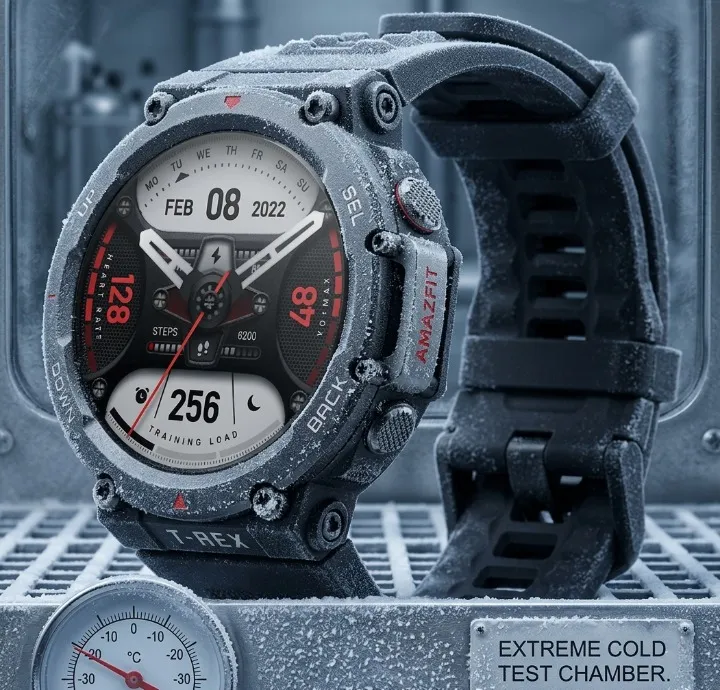
The Amazfit T-Rex Ultra delivers MIL-STD-810H military durability ratings, 10 ATM water resistance, dual-band GPS, and 16 to 18 days of real-world battery life on an AMOLED display at a price point that undercuts Garmin Fenix 8 by $600 to $800.
GPS endurance at 50 hours covers multi-day hiking trips without a solar panel. The rugged titanium body handles drops, dust, and water that most smartwatches cannot survive. This is the value case for outdoor use: not as refined as Garmin in terms of GPS analytics and training metrics, but significantly cheaper and still built tough.
Outdoor enthusiasts who want rugged construction and good battery life without the Garmin price tag.
9. OnePlus Watch 3 - Best Wear OS Smartwatch Battery Life
- Battery claim: 120 hours (5 days)
- Real-world: 4.5 to 5 days
- GPS battery: 12 hours
- Display: AMOLED 1.43-inch
- Charging time: Fast charge: 30 minutes for 80%; full charge in 70 minutes
- Price range: $300+
Five days of battery life on Wear OS is genuinely impressive. Google’s Wear OS platform has historically struggled with battery efficiency compared to Garmin OS or Zepp OS. The OnePlus Watch 3 changes that by pairing a power-efficient processor architecture with aggressive background task management.
The watch runs full Google Play Store app access, Google Assistant, Google Maps navigation, and NFC contactless payment on Wear OS. It pairs with Android devices only. iPhone users should look elsewhere.
Fast charging is the other headline: 30 minutes gets you to 80%, and a full charge takes 70 minutes. For a five-day battery watch, this means charging once on Sunday morning and wearing it the rest of the week.
Android users who want a full Wear OS app ecosystem with Google services and a realistic 5-day battery life.
10. Fitbit Sense 2 - Best Budget Health Smartwatch Battery Life
- Battery claim: 6 days
- Real-world: 5.5 to 6 days
- GPS battery: 12 hours (built-in GPS)
- Display: AMOLED
- Charging time: 2 hours to full
- Price range: $200 to $250
Fitbit consistently delivers on battery claims better than most competitors. The Sense 2 claims 6 days and delivers 5.5 to 6 days in real testing. It covers ECG, SpO2, skin temperature sensing, continuous heart rate monitoring, and built-in GPS in that six-day window.
Google’s acquisition of Fitbit brought Google Wallet (NFC payment) integration and tighter Android connectivity. iPhone compatibility remains good for the core health features. The Fitbit platform is particularly strong for sleep tracking and stress monitoring through the electrodermal activity (EDA) sensor.
Six days is not 14 days. But at $200 to $250, the Sense 2 delivers a full health sensor package with accurate battery life estimates and a track record for reliability.
Budget buyers who want comprehensive health monitoring, 5 to 6 day battery life, and proven platform reliability.
Best Picks By Use Cases
Best Battery Life Smartwatch for iPhone Users
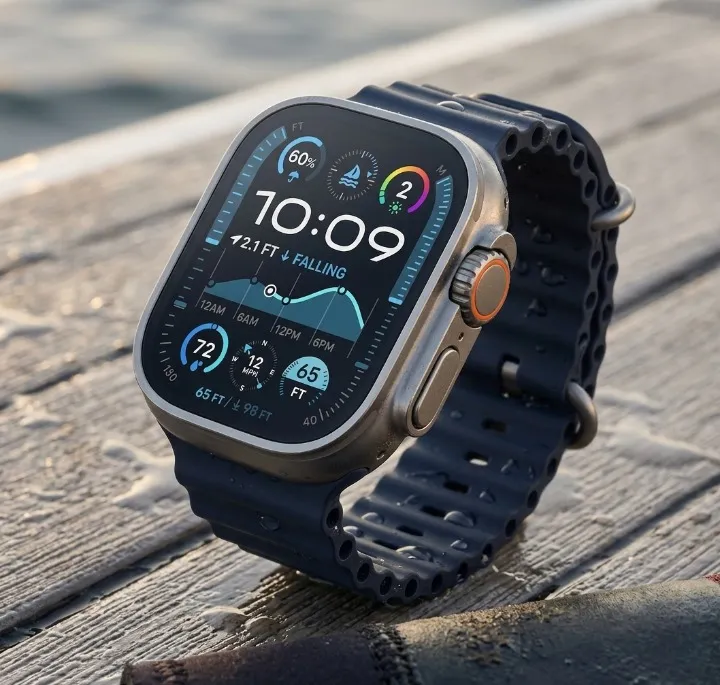
Apple Watch Ultra 2 leads for native iPhone integration at 36 to 60 hours of real-world battery. For most iPhone users that means daily charging, but it is still the longest battery available in the watchOS ecosystem.
For iPhone users who want longer battery without switching to watchOS, both Amazfit GTR 4 and Garmin Venu 3 support iPhone pairing through Bluetooth with limited but functional notification syncing, health data access, and app compatibility. You lose Apple Pay, Siri, and the tight iOS integration, but you gain 11 to 14 days of battery life.
Best for iPhone, native iOS features: Apple Watch Ultra 2 (36 to 60 hours)
Best for iPhone, long battery life: Garmin Venu 3 (10 to 12 days) or Amazfit GTR 4 (11 to 13 days)
Best Battery Life Smartwatch for Android Users
Android users have the widest selection of long-battery options. Wear OS watches pair natively with Android and support Google Play apps, Google Maps, and Google Wallet. COROS, Garmin, and Amazfit watches also pair with Android via Bluetooth.
Best Wear OS battery life for Android: OnePlus Watch 3 (4.5 to 5 days)
Best non-Wear OS for Android, budget: Amazfit GTR 4 (11 to 13 days, $150 to $200)
Best non-Wear OS for Android, premium: Garmin Venu 3 (10 to 12 days)
Best Android smartwatch for runners: Garmin Fenix 8 Solar (22 to 26 days) or COROS Vertix 2 (50+ days)
Samsung Galaxy Watch Ultra lasts 3 days with AOD on, 5 days AOD off. The Google Pixel Watch 4 averages 24+ hours. Both are strong flagship Android watches but neither competes on battery with Garmin or Amazfit in this category.
Best Battery Life Smartwatch for Women
The biggest frustration for women shopping long-battery smartwatches is that many ultra-endurance models (Garmin Enduro, COROS Vertix) are large, heavy, and designed for a wide male wrist. Three watches combine long battery life with a slim, wearable form factor.
Garmin Venu 3S: The smaller 41mm variant of the Venu 3 retains 10-day battery in a more wrist-friendly size.
Withings ScanWatch 2 (38mm): Thirty-day battery in an analog watch design that suits slim wrists and formal environments.
Amazfit GTR 4: Available in a 46mm case but lighter than most Garmin equivalents at its price point. For buyers with small wrists, the Amazfit GTR Mini offers similar battery in a smaller body.
For more details on best pick for small size wrists, Explore our best small wrist smartwatches for women to ease your decision process that fit precisely with required features.
Best Battery Life Smartwatch for Nurses and Long Shifts
A 12-hour nursing shift with restrictions on phone access requires a watch that does three things without fail: survive the full shift, deliver clear silent haptic alerts, and tolerate hand washing and sanitizer exposure throughout the day.
Top picks for nurses and healthcare workers:
- Garmin Venu 3: 10 to 12 days battery means a nurse charging Sunday night wears the watch through the full work week without touching the charger. Silent haptics are strong. Rated to 5 ATM water resistance, which handles repeated hand washing and sanitizer contact. AMOLED display is bright enough to read in varied lighting.
- Fitbit Sense 2: Six days of battery, strong sleep tracking for shift workers on rotating schedules, EDA stress monitoring, and 5 ATM water resistance. At $200 to $250 it is accessible for nurses on a budget.
- Amazfit GTR 4: Eleven to thirteen days battery, 5 ATM water resistance, silent vibration alerts, and budget pricing. Zepp OS is less full-featured than Garmin OS but covers the essentials for shift work.
For a deeper comparison tailored specifically to healthcare workers, read our dedicated guide to best smartwatches for nurses and long shifts which covers silent alarm features, HIPAA-safe notification settings, and durability ratings in clinical environments.
If medical-grade accuracy matters as much as battery life see the Best blood pressure monitoring smartwatches.
Battery Life by Use Case: Which Watch Fits Your Day
| Use Case | Battery Required | Top Picks |
|---|---|---|
| Daily commuter (12-14 hr day, charge nightly) | 18+ hours | Apple Watch Ultra 2, Samsung Galaxy Watch Ultra, OnePlus Watch 3 |
| 12-hour work shift, no charging during shift | 24+ hours reliably | Garmin Venu 3, Fitbit Sense 2, Amazfit GTR 4 |
| Weekend camping trip (2 nights, no outlet) | 5+ days | OnePlus Watch 3, Amazfit GTR 4, Fitbit Sense 2 |
| 7-day international vacation, no charger | 8+ days | Amazfit GTR 4, Garmin Venu 3, Withings ScanWatch 2 |
| Multi-day trail run or ultramarathon | 50+ GPS hours | Garmin Enduro 3, COROS Vertix 2, Garmin Fenix 8 Solar |
| Remote expedition (weeks without power) | 30+ days | Garmin Enduro 3, COROS Vertix 2, Garmin Instinct 2X Solar |
AOD On vs AOD Off: Battery Cost by Model
| Model | AOD Off | AOD On | Battery Reduction |
|---|---|---|---|
| Garmin Venu 3 | 14 days | 8 days | 43% reduction |
| Amazfit GTR 4 | 14 days | 10 to 11 days | 21 to 29% reduction |
| Samsung Galaxy Watch Ultra | 5 days | 3 days | 40% reduction |
| Apple Watch Ultra 2 | 60 hours | 36 hours | 40% reduction |
| OnePlus Watch 3 | 5 days | 3.5 days | 30% reduction |
| Fitbit Sense 2 | 6 days | 4 days | 33% reduction |
MIP display watches (Garmin Enduro, COROS Vertix 2, Garmin Instinct 2X) run always-on by default with no measurable battery cost. Their displays refresh only when content changes, so AOD adds essentially zero power draw.
7 Ways to Extend Your Smartwatch Battery Life
1. Turn off always-on display. The single most impactful step on any AMOLED watch. On Samsung Galaxy Watch Ultra, this alone adds 2 full days. Use wrist-raise activation instead.
2. Set heart rate monitoring to interval, not continuous. Switch from continuous PPG sensor polling to every 15 or 30 minutes. Most users notice no difference in daily health data while gaining 20 to 30 percent more battery life.
3. Disable SpO2 continuous monitoring. Blood oxygen monitoring drains significant power when set to continuous. Enable it for sleep tracking only, or on-demand measurement.
4. Reduce GPS polling in long activities. Garmin’s UltraMax mode and COROS’s power saving GPS mode extend GPS session length by 50 to 100 percent by reducing location ping frequency. For hikes where exact trail mapping matters less than finishing without battery death, use power-saving GPS.
5. Lower display brightness. AMOLED brightness correlates directly with power draw. Dropping from 100% to 50% brightness cuts display power consumption significantly, especially in indoor environments.
6. Enable low power or battery saver mode for specific periods. Garmin’s Expedition Mode, Amazfit’s Essential Mode, and Apple Watch’s Low Power Mode all disable advanced sensors while maintaining time and basic step counting. Use them during sleep or periods with no charging access.
7. Keep your watch software updated. Firmware updates from Garmin, Amazfit, and Samsung frequently include battery efficiency improvements. Garmin in particular has a track record of extending battery performance through software optimization after launch.
Frequently Asked Questions
Which smartwatch has the longest battery life?
The Garmin Enduro 3 lasts 36 days in standard smartwatch mode and up to 90 days with solar charging. The COROS Vertix 2 reaches 60 days without solar. The Garmin Instinct 2X Solar runs indefinitely with regular sun exposure.
How long should a smartwatch battery last?
Budget smartwatches typically last 5 to 7 days. Mid-range fitness watches last 7 to 14 days. Premium endurance GPS watches last 14 to 60+ days. Flagship Apple Watch and Samsung Galaxy Watch models last 1 to 2 days, which requires daily charging for most users.
Does the Apple Watch have good battery life?
Apple Watch Series 11 lasts 18 to 24 hours. Apple Watch Ultra 2 reaches 36 to 60 hours in real-world use. Both require daily charging for most users. Compared to Garmin, Amazfit, and COROS options, Apple Watch battery life is the weakest in the market, which is the primary driver of buyers searching for alternatives.
What drains a smartwatch battery the most?
GPS is the largest drain, cutting battery life by 60 to 80 percent compared to smartwatch-only mode. Always-on display is the second largest drain on AMOLED models (20 to 40 percent reduction). Continuous heart rate and SpO2 monitoring, cellular LTE connectivity, and high display brightness all contribute additional drain.
Can a smartwatch last a week without charging?
Yes. Several models exceed one week: Garmin Venu 3 (10 to 12 days), Amazfit GTR 4 (11 to 13 days), Fitbit Sense 2 (5.5 to 6 days), and OnePlus Watch 3 (4.5 to 5 days) all reach or exceed 5 days in real-world use.
What is the best smartwatch for long shifts?
The Garmin Venu 3 is the top pick for nurses and shift workers. Its 10 to 12 day real-world battery covers a full week of 12-hour shifts without mid-shift charging. It has strong haptic alerts, 5 ATM water resistance for frequent hand washing, and a bright AMOLED display readable in varied hospital lighting.
Is MIP or AMOLED better for battery life?
MIP displays are significantly better for battery life. A Garmin Fenix 8 MIP lasts 28 days. The same watch with AMOLED lasts 16 days. MIP screens draw power only when pixels change, allowing the display to stay on permanently at near-zero cost. AMOLED pixels generate their own light and draw continuous power proportional to brightness and screen content.
Which smartwatches last more than a month?
Four models reliably exceed 30 days: Garmin Enduro 3 (28 to 32 days real-world, up to 90 days solar), Garmin Enduro 2 (25 to 30 days real-world, up to 46 days solar), COROS Vertix 2 (50 to 55 days real-world), and Garmin Instinct 2X Solar (unlimited with sun, 40 days indoors).
What is the best long battery smartwatch for iPhone?
Apple Watch Ultra 2 is the best iOS-native option at 36 to 60 hours. For iPhone users willing to use a third-party watch, Amazfit GTR 4 (11 to 13 days) and Garmin Venu 3 (10 to 12 days) both pair with iPhone via Bluetooth for notifications, health data, and basic app functions, with significantly longer battery life than any Apple Watch.
Does always-on display drain smartwatch battery?
Yes. AOD reduces battery by 20 to 40 percent on all AMOLED smartwatches. Samsung Galaxy Watch Ultra drops from 5 days to 3 days with AOD enabled. Garmin Venu 3 drops from 14 days to 8 days. MIP display watches run always-on by default with no measurable battery cost.
Final Recommendation by Budget and Use Case
- Best battery life, no compromises: Garmin Enduro 3. Thirty-six days real-world, 90 days solar, 320 hours GPS. Nothing else comes close. Garmin Enduro 3 on Amazon.
- Best premium smartwatch with long battery: Garmin Venu 3. Fourteen days claimed, 10 to 12 days real-world, AMOLED display, fast charging. The watch for people who want both beauty and endurance. Garmin Venu 3 on Amazon.
- Best for Android users who want Google apps: OnePlus Watch 3. Five days on Wear OS with full Google Play access. The only Wear OS watch that genuinely competes on battery. OnePlus Watch 3 on Amazon.
- Best budget long battery: Amazfit GTR 4. Eleven to thirteen days, AMOLED display, $150 to $200. The watch that outperforms Samsung and Apple at one-third the price. Amazfit GTR 4 on Amazon.
If you’re still deciding which features matter most for your situation? Our complete smartwatch buying guide covers GPS accuracy, health sensor comparisons, app ecosystem depth, and how to match a smartwatch to your specific lifestyle.