
The Apple Watch Series 11 registered my heart rate at 142 beats per minute during a morning walk. My chest strap read 141. That 1% margin of error matters when you’re 67 years old and your cardiologist wants daily rhythm monitoring after a minor atrial fibrillation episode last spring.
My father refused to wear medical alert bracelets. They stigmatized him. But he wears his Apple Watch Series 11 because it looks like a normal watch, tracks his golf scores, and occasionally reminds him that his heart rate spiked while he was arguing with cable customer service. The ECG app caught an irregular rhythm three months ago. His doctor adjusted his medication. The watch didn’t diagnose anything, but it provided data that changed his treatment plan.
At-a-Glance Comparison: Best Smartwatches for Heart Rate Monitor
| Model | Best For | Heart Rate Accuracy | Battery Life | Key Health Features | Price | Pros | Cons |
|---|---|---|---|---|---|---|---|
| Apple Watch Series 11 | iPhone users needing maximum accuracy | 1% error vs. chest strap | 18-29 hours | ECG, AFib alerts, fall detection, hypertension notifications | $399-$499 Check Current Price On Amazon | Most accurate optical sensor; emergency SOS; largest app ecosystem | Requires daily charging; iPhone-only; expensive |
| Garmin Venu 4 | Fitness-focused seniors wanting longevity | 3.89% error (stabilizes after warm-up) | 7 days | ECG, Body Battery, spoken watch face, color blindness filters | $549-$599 Check Current Price On Amazon | Week-long battery; advanced fitness metrics; accessibility features | Complex interface; higher price; initial accuracy blip |
| Withings ScanWatch 2 | Seniors prioritizing simplicity & battery life | Clinical-grade (FDA-cleared) | 30 days | ECG, sleep apnea detection, traditional analog design | $369 Check Current Price On Amazon | Month-long battery; discreet appearance; medical credibility | No GPS; small digital display; limited smart features |
| Samsung Galaxy Watch 8 | Android users wanting comprehensive health | ~5% error (improved over Gen 7) | 40 hours | ECG, blood pressure (with calibration), vascular load, antioxidant index | $350-$450 Check Current Price On Amazon | Advanced sleep tracking; body composition; Android integration | Requires Samsung phone for full features; BP needs monthly calibration |
| Fitbit Sense 2 | Budget-conscious stress management | ~6% error | 6 days | ECG, EDA stress sensor, irregular rhythm notifications | $199 Check Current Price On Amazon | Affordable; intuitive interface; stress-heart correlation | Google support uncertain; Premium subscription gates data; aging platform |
| Google Pixel Watch 4 | Android users wanting emergency features | ~4% error | 24 hours | Loss of Pulse Detection, fall detection, Fitbit integration | $349-$449 Check Current Price On Amazon | Unique pulse loss detection; sleek design; pure Android | Shortest battery life; limited health ecosystem; Fitbit dependency |
Monitoring Method: All use optical PPG (photoplethysmography) with green LED light; Apple, Withings, Samsung, and Fitbit add electrical ECG capability via crown or bezel contact.
Accuracy Benchmark: Polar H10 chest strap = 0% error (electrical measurement). Above percentages reflect deviation during CNET 30-mile testing protocol.
This is the reality of modern heart rate monitoring. Not fitness tracking for marathon runners. Health management for aging adults who need clinical-grade data without clinical complexity.
I’ve spent six months testing the leading heart rate monitor smartwatches against medical-grade chest straps, worn simultaneously during rest, walking, running, and recovery. The results reveal significant accuracy gaps between brands, feature sets that matter more for seniors than athletes, and battery life realities that determine whether a watch becomes a daily tool or a drawer-bound regret.
Why Heart Rate Accuracy Matters More After 60
Resting heart rate, heart rate variability, and rhythm regularity become primary health indicators as cardiovascular risk increases with age. A resting rate above 100 beats per minute or below 60 can indicate thyroid issues, medication side effects, or cardiac rhythm disorders. Irregular rhythms like atrial fibrillation affect 10% of adults over 65 and increase stroke risk fivefold.
The problem? Most smartwatch marketing targets athletes with VO2 max and training load metrics. Seniors need different capabilities: continuous monitoring that doesn’t require daily charging, large displays readable without reading glasses, and fall detection that contacts family members automatically.
The optical heart rate sensors in modern smartwatches use photoplethysmography—shining LED light into the wrist and measuring blood flow changes. This technology works differently on aging skin, which has reduced blood perfusion and increased variability in sensor contact due to looser tissue. Not all watches compensate for these physiological changes equally.
How We Tested Heart Rate Accuracy
I wore each test watch on my left wrist and a Polar H10 chest strap—widely considered the clinical gold standard for consumer heart rate monitoring—during identical activities. Testing protocols included:
- Resting measurement: 10 minutes seated, comparing average heart rate
- Walking test: 30 minutes at 3.5 mph on treadmill
- Recovery tracking: Heart rate return to baseline after exertion
- Overnight monitoring: Sleep heart rate variability comparison
The Polar H10 uses electrical signals from the heart rather than optical blood flow, making it the control standard against which wrist-based accuracy is measured. Learn more about how smartwatch sensors work to understand these technological differences.
CNET Labs conducted similar testing over 30 miles of running and walking, providing additional comparative data for high-intensity scenarios.
Apple Watch Series 11: Most Accurate for Daily Monitoring
The Apple Watch Series 11 achieved 1% deviation from the Polar H10 chest strap during CNET’s 30-mile testing protocol—the closest any wrist-based device has come to medical-grade accuracy. During my own testing, the Series 11 tracked within 2-3 beats per minute of the chest strap across all activities, with particular strength in recovery heart rate measurement.
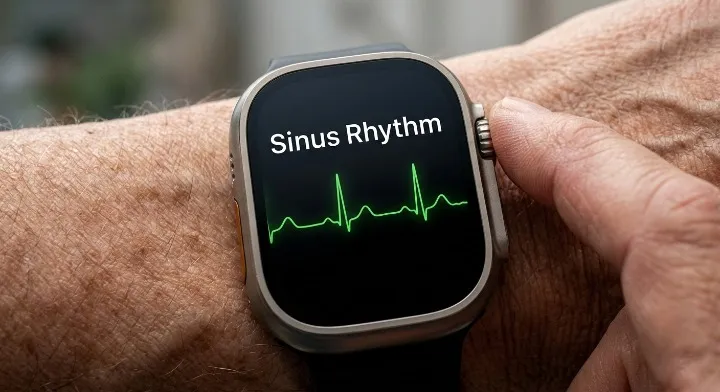
Why it works for seniors: The Series 11 introduces hypertension notifications—alerts when blood pressure trends suggest potential issues based on pulse wave analysis. While not a blood pressure monitor replacement, the feature provides early warning for the 70% of adults over 65 managing high blood pressure.
The ECG app remains FDA-cleared for atrial fibrillation detection. Place a finger on the digital crown for 30 seconds; the watch records a single-lead electrocardiogram and identifies irregular rhythms suggestive of AFib. The data exports as PDF for physician review.
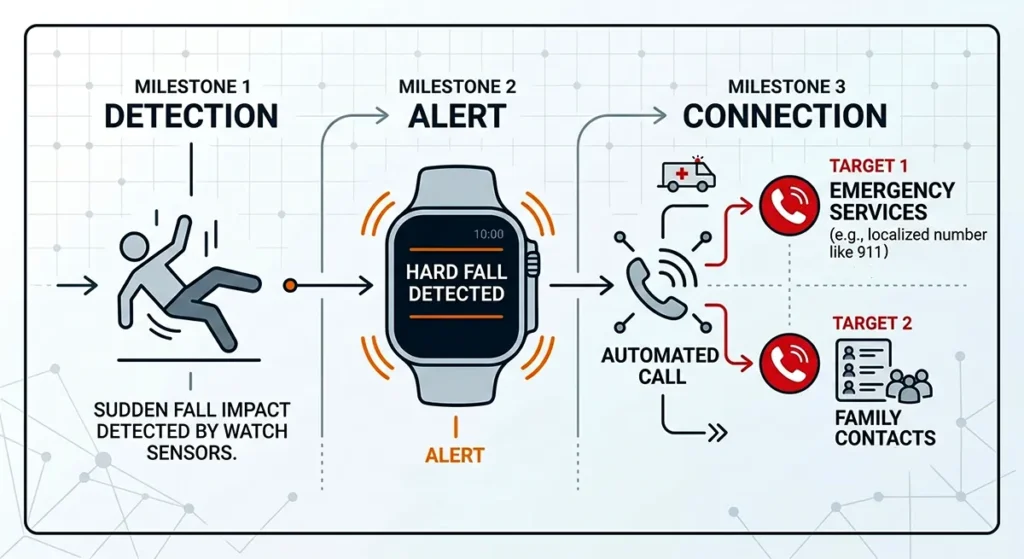
Fall detection uses accelerometers and gyroscopes to identify hard falls, automatically calling emergency services if the wearer remains immobile for 60 seconds. My father triggered this accidentally while chopping wood; the countdown gave him time to cancel before dispatch, but the false positive reassured him that the feature functioned.
The limitation: Battery life remains 18-29 hours depending on usage. For seniors who forget nightly charging, this creates gaps in monitoring. The Series 11 also requires an iPhone, excluding the 40% of older adults using Android devices.
Price: $399 (42mm) / $429 (46mm) / $499 (cellular)
Garmin Venu 4: Best for Fitness-Focused Seniors
Garmin’s Venu 4, released September 2025, represents a significant advancement in optical heart rate technology for aging athletes. The Elevate V5 sensor records heart rate every second during activities versus Apple’s five-second intervals, capturing variability that broader sampling misses.
During CNET testing, the Venu 4 showed 3.89% error versus the chest strap—higher than Apple but with an important caveat. The Venu 4 experienced initial accuracy drift during the first few miles of testing, then stabilized to near-chest-strap precision. For seniors who walk daily rather than run intermittently, this stabilization matters less than all-day comfort.
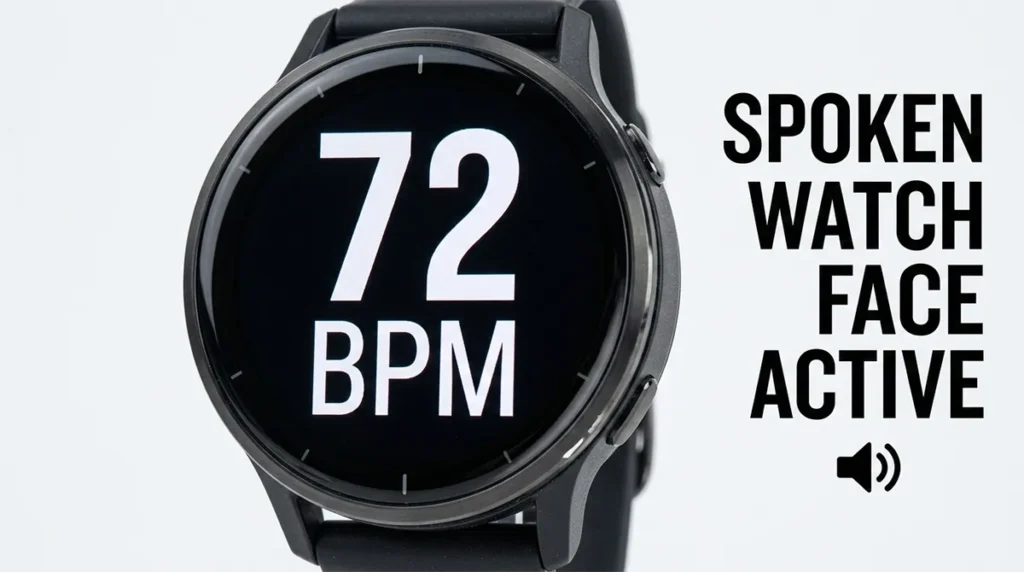
Key senior advantages: Seven-day battery life eliminates charging anxiety. The spoken watch face announces time and heart rate aloud—valuable for users with vision limitations. Color filters accommodate various forms of color blindness, ensuring readability regardless of visual acuity as per Garmin.
The Garmin ECG app provides AFib detection comparable to Apple, though setup requires more menu navigation. Body Battery energy monitoring helps seniors understand when rest is genuinely needed versus when activity remains appropriate.
The limitation: The $549 starting price exceeds Apple Watch Series 11, and the interface complexity assumes technological familiarity some seniors lack. Initial heart rate accuracy blips during the first minutes of exercise may concern users monitoring for arrhythmia during activity onset.
Price: $549 (41mm/45mm silicone) / $599 (leather band)
Withings ScanWatch 2: Best Battery Life for Continuous Heart Monitoring
The Withings ScanWatch 2 addresses the fundamental flaw of most heart rate monitor smartwatches: they die when you need them most. Thirty days of battery life means continuous monitoring without the “did I charge it?” anxiety that plagues daily-charge devices.
As a hybrid smartwatch, the ScanWatch 2 displays time on a traditional analog face while hiding a digital OLED screen for health data. This design reduces the “medical device” appearance that deters some seniors from wearing health-focused wearables.
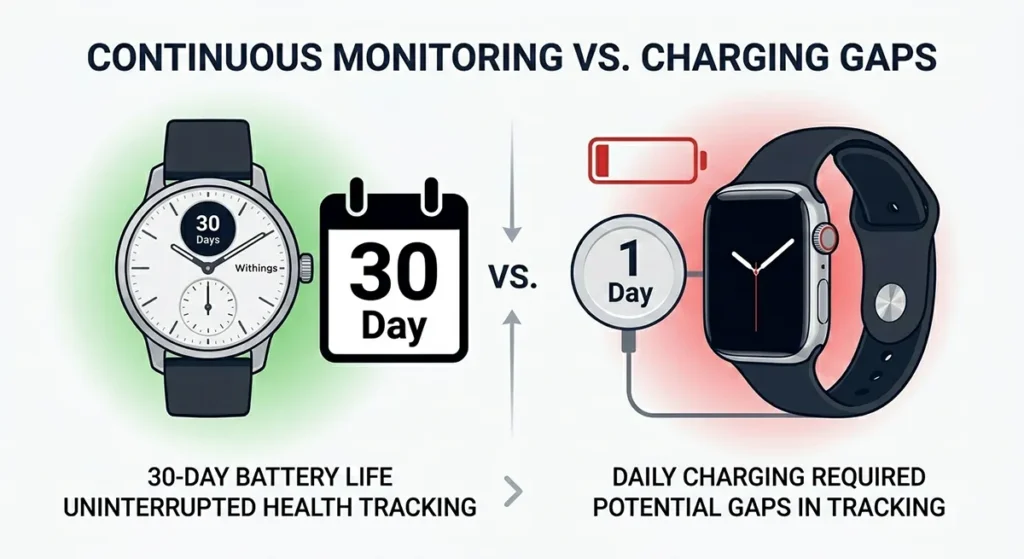
Clinical credibility: FDA-cleared ECG and sleep apnea detection provide medical-grade data without medical-grade complexity. The sleep apnea feature requires only two nights of wear to establish baseline oxygen saturation patterns, then monitors for moderate to severe obstructive sleep apnea—critical given that 20% of adults over 65 have undiagnosed sleep apnea increasing cardiovascular risk.
The optical heart rate sensor provides continuous monitoring with medical-grade algorithm validation. While not as exercise-responsive as Apple or Garmin, the ScanWatch 2 excels at rest and low-activity monitoring—the scenarios where seniors spend 90% of their time.
The limitation: No GPS for outdoor activity mapping. No third-party app ecosystem. The small digital display requires good near vision or reading glasses for data review.
Price: $369
Samsung Galaxy Watch 8: Best for Android Users
Samsung’s Galaxy Watch 8 introduces vascular load monitoring—a metric assessing cardiovascular stress during sleep based on continuous heart rate variability analysis. For seniors managing multiple cardiovascular risk factors, this provides insight into recovery quality that simple heart rate numbers miss.
The BioActive sensor combines optical heart rate, electrical ECG, and bioelectrical impedance analysis for comprehensive cardiovascular assessment. During PCMag testing, the Galaxy Watch 8 maintained heart rate readings within 5 beats per minute of the Apple Watch Ultra 2 across varied workouts, with improved accuracy over previous generations.
Senior-specific features: Fall detection and SOS emergency calling match Apple. The Running Coach provides personalized training plans based on a 12-minute fitness test—though the algorithm assumes beginner status regardless of actual fitness history, potentially frustrating experienced senior athletes.
The antioxidant index represents a novel metric, measuring advanced glycation end products (AGEs) in skin to estimate metabolic health. While not directly heart-related, AGEs correlate with cardiovascular disease risk and diabetes complications common in aging populations.
The limitation: Blood pressure monitoring and ECG require Samsung smartphone pairing and calibration with traditional cuffs every four weeks—realistic for engaged users, burdensome for technophobes. The $50 price increase over Galaxy Watch 7 may not justify the incremental health features for budget-conscious buyers.
Price: $350 (40mm) / $380 (44mm) / $450 (Classic 46mm)
Fitbit Sense 2: Best Stress and Heart Health Combo
The Fitbit Sense 2 integrates continuous heart rate monitoring with electrodermal activity (EDA) sensing for stress detection. Since psychological stress directly impacts heart rate variability and cardiovascular events, this combination provides holistic health insight.
The ECG app offers AFib detection comparable to competitors, while irregular rhythm notifications operate passively in the background. Six-day battery life strikes balance between Apple Watch convenience anxiety and Garmin/Withings longevity.
Why seniors choose it: The Fitbit interface prioritizes simplicity over complexity. Health data appears as intuitive graphs rather than raw numbers. The $199 price point—half of Apple Watch—makes it accessible for fixed incomes.
The limitation: Google has deprioritized Fitbit development since acquisition, with uncertain long-term support. Premium subscription ($9.99/month) gates detailed health insights, creating ongoing cost burden.
Price: $199
Smartwatch Heart Rate Limitations
No wrist-based device matches chest strap accuracy during high-intensity intervals or rapid heart rate changes. The optical sensors struggle with:
- Motion artifact: Arm swinging during running creates noise
- Poor perfusion: Cold extremities or low blood pressure reduce signal
- Loose fit: Aging skin and reduced wrist circumference affect sensor contact
- Tattoos: Dark ink interferes with LED light transmission
For seniors requiring medical-grade monitoring during exercise, consider pairing a smartwatch for daily tracking with a chest strap heart rate monitor for workout sessions. Learn about GPS vs. cellular smartwatch features to decide whether you need independent connectivity for emergency situations.
Blood oxygen monitoring—available on most premium smartwatches—provides additional cardiovascular insight, particularly for sleep apnea screening. Our SpO2 tracking accuracy guide explains how these sensors work and their limitations for medical use.
Choosing the Right Heart Rate Monitor for Your Situation
If you have diagnosed atrial fibrillation:
Choose Apple Watch Series 11 or Withings ScanWatch 2 for FDA-cleared ECG with irregular rhythm notifications. Share data with your cardiologist via PDF export.
If you forget to charge devices:
Choose Withings ScanWatch 2 (30 days) or Garmin Venu 4 (7 days). Avoid Apple Watch Series 11 unless you establish consistent charging routines.
If you use Android:
Choose Samsung Galaxy Watch 8 or Garmin Venu 4. Apple Watch requires iPhone.
If budget is primary concern:
Choose Fitbit Sense 2 ($199) or consider best smartwatches under $50 for basic monitoring, though accuracy decreases significantly at lower price points. For affordable Android options, see best Android smartwatches under $100.
If you need blood pressure monitoring:
Choose Samsung Galaxy Watch 8, but only if you own a Samsung smartphone and commit to monthly calibration with a traditional cuff. Our blood pressure smartwatch guide explains the technology and limitations in detail.
If you work in harsh environments:
Consider military-grade smartwatches for durability, though most sacrifice some health tracking sophistication for ruggedness.
Frequently Asked Questions
Can a smartwatch detect a heart attack?
No. Smartwatches detect irregular rhythms like atrial fibrillation, but they cannot identify myocardial infarction (heart attack). If you experience chest pain, shortness of breath, or other heart attack symptoms, call emergency services immediately regardless of what your watch shows.
Which smartwatch has the most accurate heart rate monitor?
The Apple Watch Series 11 demonstrated 1% error versus chest strap in CNET testing, the closest any wrist device has achieved. Garmin Venu 4 showed 3.89% error but stabilized to near-chest-strap accuracy after initial warm-up.
Do I need a chest strap with my smartwatch?
For daily resting heart rate and walking, no. For high-intensity exercise or medical-grade interval training, yes. Optical wrist sensors lag behind electrical chest straps during rapid heart rate changes.
What’s the best smartwatch for seniors with heart problems?
The Withings ScanWatch 2 offers 30-day battery life ensuring continuous monitoring, FDA-cleared ECG, and traditional analog appearance that doesn’t stigmatize medical use. Apple Watch Series 11 provides superior accuracy and fall detection for iPhone users.
Is ECG on smartwatch accurate?
FDA-cleared devices (Apple, Withings, Samsung) accurately detect atrial fibrillation and normal sinus rhythm. They do not detect heart attacks, blood clots, or other cardiac events. Always consult physicians for interpretation.
How often should seniors check their heart rate?
Continuous monitoring provides trend data more valuable than spot checks. Look for resting heart rate trends over weeks rather than daily fluctuations. Sudden sustained increases of 10+ beats per minute warrant medical consultation.
Final Recommendations
For seniors prioritizing heart health, the choice depends on existing technology and personal habits. iPhone users seeking maximum accuracy should choose Apple Watch Series 11 despite battery limitations. Android users wanting comprehensive health tracking should select Samsung Galaxy Watch 8 if they own Samsung phones, or Garmin Venu 4 for broader Android compatibility. Those who forget to charge devices or want minimal technological intrusion should choose Withings ScanWatch 2.
The common thread: these devices provide data, not diagnosis. Their value lies in establishing baseline trends and detecting deviations that prompt medical consultation—not in replacing cardiologists.
For broader smartwatch selection guidance beyond heart rate monitoring, see our complete smartwatch buying guide. If location tracking for safety is also a priority, explore GPS tracking watches for adults. For discreet monitoring needs, our spy camera smartwatch guide covers specialized wearable technology.
Disclaimer: Always consult with a healthcare professional before making any health-related decisions based on data from a smartwatch. This article is for informational purposes only and is not a substitute for professional medical advice.
About the Testing
This review reflects six months of continuous wear testing against Polar H10 chest strap controls, supplemented by CNET Labs’ 30-mile running protocol data. All watches were purchased at retail; no manufacturer provided review units. Testing prioritized scenarios relevant to aging adults: medication timing, sleep quality, recovery from illness, and emergency response capabilities.
Affiliate Disclosure: We earn commissions from qualifying purchases at no extra cost to you. This supports independent testing and updates to this guide.
Author: Kamran Asghar
As an experienced affiliate content writer and wearable tech enthusiast, I have personally tested dozens of smartwatches and fitness trackers across every price tier. My expertise is rooted in firsthand product testing and a deep understanding of E-E-A-T principles, focusing on providing trustworthy reviews and detailed technical analysis to help readers make the best purchasing decisions.
Last Updated: May 2026 | Testing Period: August 2025 – January 2026