
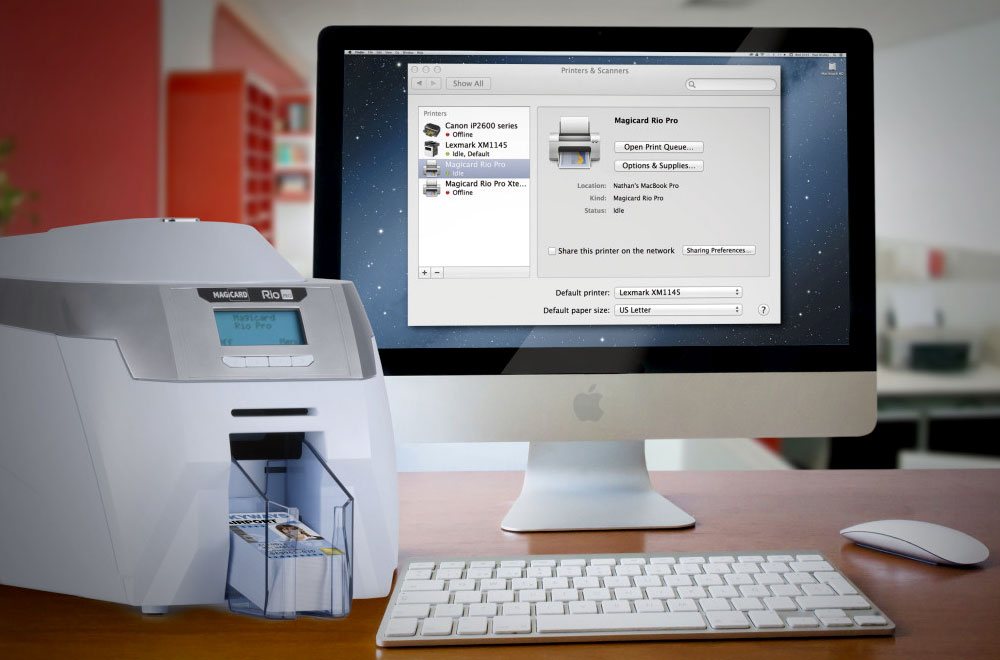
Turn on your printer and connect it to the same Wi-Fi network as your Mac. Open System Settings, click Printers & Scanners, then click the Add Printer button (+). Select your printer from the list and click Add. If your printer supports AirPrint, macOS adds it without extra drivers.
If your Mac does not see the printer, connect a USB-C to USB-B cable, add it manually by IP address, or reset the printing system. Each fix is covered below.
What You Need Before You Start
- Your Mac and printer must share the same Wi-Fi network. Guest networks often block printer discovery.
- For USB setup, you need a USB-C to USB-B cable if your Mac has only USB-C ports. Most modern MacBooks and iMacs fall into this category.
- Your printer should be powered on, loaded with paper, and free of error lights.
Method 1: Add a Printer via AirPrint (Easiest)
AirPrint is Apple’s built-in printing protocol. If your printer supports it, you do not download drivers. macOS handles everything. This is the best method for home users and the most stable after macOS updates.
Step 1: Connect your printer to Wi-Fi using its control panel or the WPS button on your router.
Step 2: On your Mac, click the Apple menu > System Settings.
Step 3: Scroll down and click Printers & Scanners.
Step 4: Click the Add Printer, Scanner, or Fax button (+) on the right.
Step 5: Wait 10–30 seconds. Your printer appears under the Default tab if it is on the same network.
Step 6: Select your printer. In the Use dropdown, choose AirPrint if it appears. Click Add.
Step 7: Print a test page from any app to confirm.
Which printers support AirPrint? Most models sold after 2015 from HP, Brother, Canon, and Epson include it. Check your printer manual or look for the AirPrint logo on the box.
If you are shopping for a new printer, see our tested picks for the best laser printers for Mac that work without extra drivers.
Method 2: Add a USB Printer to Mac (Most Reliable)
A wired USB connection bypasses every Wi-Fi problem. It is the fastest fallback when wireless setup fails.
Step 1: Update macOS to the latest version. Open System Settings > General > Software Update.
Step 2: Plug a USB-C to USB-B cable into your Mac and the printer. If your Mac has USB-A ports, use a standard USB-A to USB-B printer cable. For shipping labels, thermal label printers connect via USB and require no ink or toner.
Step 3: Turn on the printer.
Step 4: Open System Settings > Printers & Scanners.
Step 5: Your Mac should detect the printer automatically. If it appears in the list, select it and click Add.
Step 6: If the printer does not appear, click the Add Printer button (+), select the printer from the list, choose the correct driver in the Use dropdown, and click Add.
Step 7: macOS may download and install the driver automatically. Wait for this to finish before printing.
Note: Some printers require a temporary USB connection during wireless setup even if you plan to use Wi-Fi later. Check your printer manual.
Method 3: Add a Printer by IP Address (Network Admin Method)
Use this method when your printer is on the network but does not appear in the Default list. This happens on corporate networks, VLANs, or when Bonjour discovery is disabled.
Step 1: Find your printer’s IP address. Print a network configuration page from the printer’s control panel, or ask your network administrator.
Step 2: Open System Settings > Printers & Scanners.
Step 3: Click the Add Printer button (+).
Step 4: Click the IP tab (globe icon) at the top of the window.
Step 5: Enter the printer’s IP address in the Address field.
Step 6: Choose a protocol:
- AirPrint: Best for modern printers. No extra driver needed.
- IPP (Internet Printing Protocol): Standard for most network printers.
- LPD (Line Printer Daemon): For older printers and print servers.
- HP Jetdirect – Socket: For HP network printers.
Step 7: Leave the Queue field blank unless your administrator gave you a specific queue name.
Step 8: Enter a name and location for the printer.
Step 9: In the Use dropdown, choose Select Software if your model is not listed automatically. Find your printer in the list and click Add.
Method 4: Add a Bluetooth Printer to Mac
Bluetooth printers work without Wi-Fi. They are less common but useful in mobile setups.
Step 1: Put your printer into pairing mode. Check the manual for the exact button combination.
Step 2: On your Mac, click Control Center in the menu bar > Bluetooth Settings.
Step 3: Find your printer in the Nearby Devices list and click Connect.
Step 4: Open System Settings > Printers & Scanners.
Step 5: Click the Add Printer button (+) and select your Bluetooth printer from the list.
Step 6: Choose the correct driver and click Add.
Note: Bluetooth print speeds are slower than Wi-Fi or USB. Use this method only when Wi-Fi is unavailable.
Method 5: Add a Network Printer via WPS
WPS (Wi-Fi Protected Setup) connects your printer to the router without typing the Wi-Fi password on a tiny printer screen.
Step 1: Press and hold the Wireless or Wi-Fi button on your printer for five seconds until the light flashes.
Step 2: Within two minutes, press the WPS button on your router.
Step 3: Wait for the printer’s wireless light to stop flashing. This signals a successful connection.
Step 4: Open System Settings > Printers & Scanners on your Mac.
Step 5: Click the Add Printer button (+). Your printer should appear in the Default list within 30 seconds.
Step 6: Select it, choose AirPrint or the manufacturer driver, and click Add.
Warning: Some security experts advise against WPS because of known vulnerabilities. If your router allows, disable WPS after setup and rely on standard Wi-Fi pairing.
Brand-Specific Wireless Setup Tips
HP Printers
HP Smart is the official Mac app for HP printer setup. It handles Wi-Fi credentials, driver installation, and scanning. Download it from the Mac App Store. The app walks you through the wireless wizard and pushes your network password to the printer automatically.
Brother Printers
Brother offers a Wireless Device Setup Wizard for Mac. Download it from brother.com. The wizard detects your printer over USB, transfers Wi-Fi settings, then disconnects the cable. For older Brother models, you may need to enable AirPrint in the printer’s web interface. Brother makes some of the most reliable monochrome printer models for Mac users.
Brother laser printers separate the drum from the toner cartridge. Read our guide on how long a printer drum lasts to plan replacement costs.
Canon Printers
Use the Canon PRINT app or the printer’s built-in Wi-Fi setup wizard. Most Canon PIXMA and imageCLASS models support AirPrint once connected to the network. If the Mac does not detect the printer, print a network settings page and add it by IP address using the IPP protocol.
Canon makes excellent color AIOs for home offices. Teachers should also see our color printers for classrooms guide.
Epson Printers
Epson iPrint handles setup and mobile printing. For Macs, Epson printers usually appear automatically via AirPrint after joining the Wi-Fi network. If not, add the printer manually and choose the Epson driver from the Select Software list.
Troubleshooting: Mac Not Finding Your Printer
Fix 1: Check the Same Network
Click the Wi-Fi icon on your Mac and note the network name. Print a network configuration page from your printer and compare the SSID. A mismatch is the most common cause of “printer not found.”
Fix 2: Restart in the Right Order
Power off your router, printer, and Mac. Wait one full minute. Power on the router first and wait for the internet light to stabilize. Power on the printer next. Power on the Mac last. This rebuilds the DHCP table and clears stale network entries.
Fix 3: Disable VPN and Check Firewall
Active VPNs often block local network discovery. Disconnect your VPN, then try adding the printer again. Corporate firewalls may block Bonjour/mDNS packets. Ask your IT team to whitelist printer discovery traffic.
Fix 4: Update macOS and Printer Firmware
Open System Settings > General > Software Update. Install any pending macOS updates. Apple ships printer driver updates inside system updates. Then check your printer manufacturer’s website for firmware updates. Outdated firmware breaks AirPrint compatibility on newer macOS versions.
Fix 5: Reset the Printing System
This removes every printer, scanner, and fax from your Mac. Use it only when other fixes fail.
- Open System Settings > Printers & Scanners.
- Hold the Control key and click anywhere in the printer list.
- Choose Reset Printing System.
- Enter your admin password.
- Restart your Mac, then add the printer fresh using one of the methods above.
Fix 6: Add It Manually by IP
If the printer never appears in the Default list, use Method 3 (IP address). Print the network configuration page to get the IP, then enter it directly in System Settings > Printers & Scanners > Add Printer > IP tab.
Fix 7: Try a Different Driver
If the printer adds but jobs never print, remove it and add it again. In the Use dropdown, switch between AirPrint and the manufacturer-specific driver. One often works when the other fails after a macOS update.
How to Set a Default Printer on Mac
- Open System Settings > Printers & Scanners.
- Click the printer you use most often.
- Click the Set Default Printer button.
- Choose this printer from the Default Printer dropdown.
From now on, every app selects this printer automatically when you hit Command + P.
How to Remove a Printer from Mac
- Open System Settings > Printers & Scanners.
- Select the printer in the list.
- Click the Remove Printer button (–).
- Click Delete Printer to confirm.
The driver files remain on your Mac. If you run an Etsy or Shopify store, learn how thermal label printers work before buying your next shipping printer. To reclaim disk space, search for the manufacturer name in Finder and move old driver folders to Trash.
FAQs
How do I get my Mac to recognize a new printer?
Make sure both devices are on the same Wi-Fi network. Restart the router, printer, and Mac in that order. Open System Settings > Printers & Scanners and click the Add Printer button. If the printer still does not appear, add it manually using the IP address from the printer’s network configuration page.
How do I add a printer to my MacBook?
The process is identical for MacBook Air, MacBook Pro, and desktop Macs. Open System Settings > Printers & Scanners, click the Add Printer button, and select your printer. For wireless models, ensure the printer is on the same Wi-Fi network first.
How do I add a printer that is not listed on a Mac?
Use the IP tab in the Add Printer window. Find the printer’s IP address from its control panel or network configuration page. Enter the IP, select the protocol (AirPrint or IPP), and choose the correct driver from the Select Software list.
Why isn’t my printer showing up on my Mac?
The most common causes are: different Wi-Fi networks, guest network isolation, VPN blocking local discovery, outdated macOS or printer firmware, or the printer being in sleep mode. Run through the troubleshooting fixes above in order.
Do I need to install drivers for Mac printers?
Not if your printer supports AirPrint. macOS includes AirPrint drivers for most modern printers. For advanced features like scanning or faxing, install the manufacturer’s app (HP Smart, Brother iPrint&Scan, Canon PRINT).
For creative projects like vinyl decals, you need a different type of machine. See our picks for the best printers for stickers.
Can I use a USB hub to connect my printer to a Mac?
Yes, but use a powered USB hub. Passive hubs may not deliver enough power for the printer to operate reliably. For best results, connect directly to the Mac or use a high-quality powered hub.
What cable do I need to connect a printer to a modern Mac?
Most modern Macs have only USB-C ports. You need a USB-C to USB-B cable. USB-B is the square-ish port on the back of most printers. If your printer has a USB-C port, use a USB-C to USB-C cable.
For business shipping, see our tested picks for the best thermal label printers that connect to Mac via USB.
About the Author
Kamran Asghar is the founder of GadgetsChamp and has spent over a decade testing printers, smartwatches, and office hardware. He has set up printers on every macOS release from Catalina through Tahoe across MacBook, iMac, and Mac Mini systems. His guides focus on real-world steps that work, not theory.
Disclaimer: GadgetsChamp participates in the Amazon Services LLC Associates Program. We earn commissions on qualifying purchases made through our affiliate links. This does not affect our editorial independence or the price you pay.